Rafael Hurtado

Questo articolo è disponibile anche in:
 Italian
 Spanish
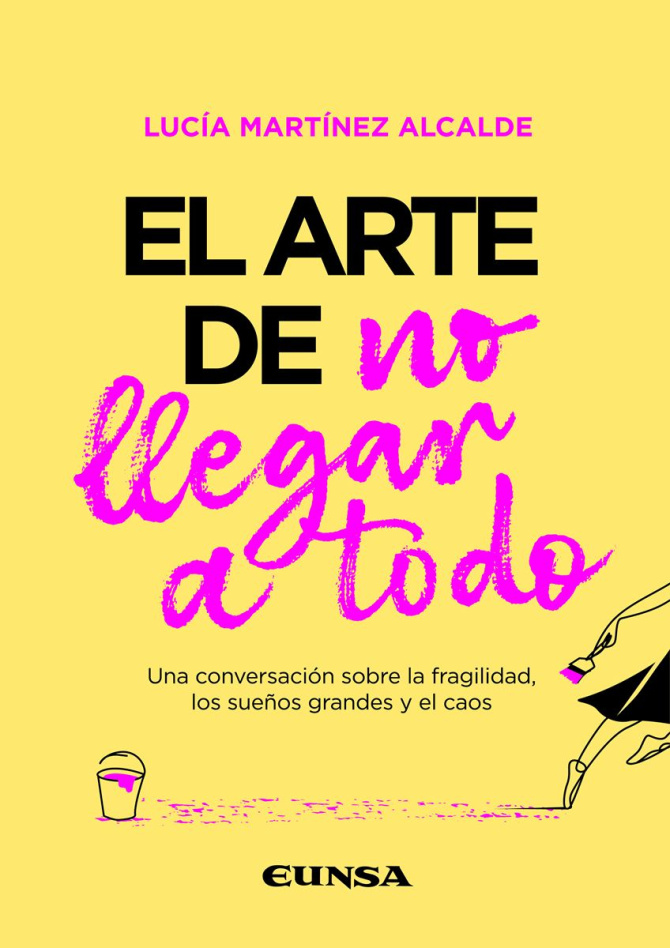
This excellent work of my friend, Dr. Pablo Galindo, was written in 2019, just a few months before the start of the pandemic. It was such an intense global experience that truly showed just how vulnerable we humans are.
In five chapters, ranging in length from 50 to 70 pages—plus an extensive, rich bibliography—the author delves into his thesis, based on the Scottish philosopher Alasdair MacIntyre’s comprehensive study of Aristotelian-Thomistic philosophy. MacIntyre, in his attempt to emphasize vulnerability, reformulates this concept from the point of view of human necessity and interdependence.
The book promises to be an academic success, holding a prominent place in studies related to the ethic of care, especially as it is an inherent part of domestic life. He finds that there is an emerging awareness of the fact that family environments are vital to all people, and “home” can be understood as a place where our family is.
Now, we must remember that home and family may be considered the most basic human construct and, therefore, is the highest level of social and cultural advancement. This is also due to the fact that “home” is where we seek out care and protection of family members in emergencies and when facing trials the world might throw at us, while also continuing to grow “from within.” This idea was taken to another level by the Belgian-American philosopher Alice von Hildebrand (1923-2022) in her work The Privilege of Being a Woman, in which she states that the family environment is an extension of the womb.
It’s true, this image of a child still “inhabiting” the womb is, without a doubt, the greatest symbolic concept that has the power to remind us that we are “creatures” and, therefore, have a natural need to be supported throughout our existence. This statement may bother many—especially the modern thinkers who have tried to reinvent society and culture, based on the assumption that every human being should be rational and free, but not vulnerable.
It seems that contemporary man is designed to transform every aspect of his reality, including himself, favoring individual or collective interests, whether those interests be those of the market or the state, of men or women. However, paradoxically, these interests should not in favor of the “needy.” But we are all “needy” and “vulnerable,” and this is what unites us, regardless of race, gender, or social status.
The tragedy exhibited so far can be studied and justified based on the new, very different sociological, clinical, and statistical studies that have been done with great precision, but are not without their issues. For the sensitive and honest observer—like my mentor Rafael Alvira (1942-2024)—just looking at domestic family life would make things clear to us. In this setting, it is easy to understand that fathers, mothers, and children are called to know how to be part of a home or, rather, we are called to recognize our vulnerability and, consequently, to support each other, with our gendered, generational status in mind.
After all, God designed the family in a way that it very much knows how to “settle in” to its own existence, in its own home, so that it can then extend that same spirit to the environment surrounding it—”to the peripheries,” Pope Francis would say—to its community and to its nation, never ceasing to be a family.
This is, perhaps, the clearest message that beloved St. John Paul II (1920-2005) left us in his Apostolic Exhortation Familiaris consortio: “Family: Become what you are!” Who could object to a civilized, corporate world considering the fact that its employees may have a home and family to which they must return in order to feel restored? Who could disagree with such an important ideal?
The Italian Prime Minister, Giorgia Meloni, would respond with a strong “NO ONE.” Society needs to fully embrace this concept, but as we know, Rome wasn’t built in a day. What might be the main challenge if we want to put the family at the center of society?
For this to happen, I think that, first of all, both fathers and mothers—and consequently, children—should accept that we are all vulnerable, and that we need to be united as a family to “get by.” That goes for all of humanity. It’s not beneficial to be eternal “bystanders,” floating from port to port, unable to truly settle anywhere. What we need to remember is that, at home, I matter for who I truly am: a man, a husband, a father, and a hard worker.
The same can be said for women, but its even more complex, because wherever she is, the home is. She is the fire of the hearth, but that fire must be tended to by her husband and children. This concept has been conveyed in studies of marriage and the family as a model of “co-responsibility,” in which all family members freely decide to equally take on household duties.
It is clear that the new postmodern culture is leading us toward a new, more “feminine” society and a new, more “masculine” home. There is one problem, though: one cannot learn to be a “home dweller” without the genius of women. Returning home implies re-establishing the role of wife and mother because it is she who knows better than anyone else how to reestablish a domestic life that is alluring, which we all should be enthusiastic to be a part of.
As biblical wisdom states: a man will leave his father and mother and be joined to his wife, and together they will become one flesh (Gen 2:24). To this, we can add: and together they will build a home, in which the lives of their children, as well as their own, as spouses, will become the sublime promise of a new world.
We are invited to reflect on these ideas beginning with the work I place in your hands today, which is truly priceless insofar as it provides philosophical and sociological arguments that will allow the reader to delve into the reality that we are all vulnerable. This notion is presented by Dr. Galindo as the “origin” of all obligations, individual and social.